Secound Publish
Redemption in perspective
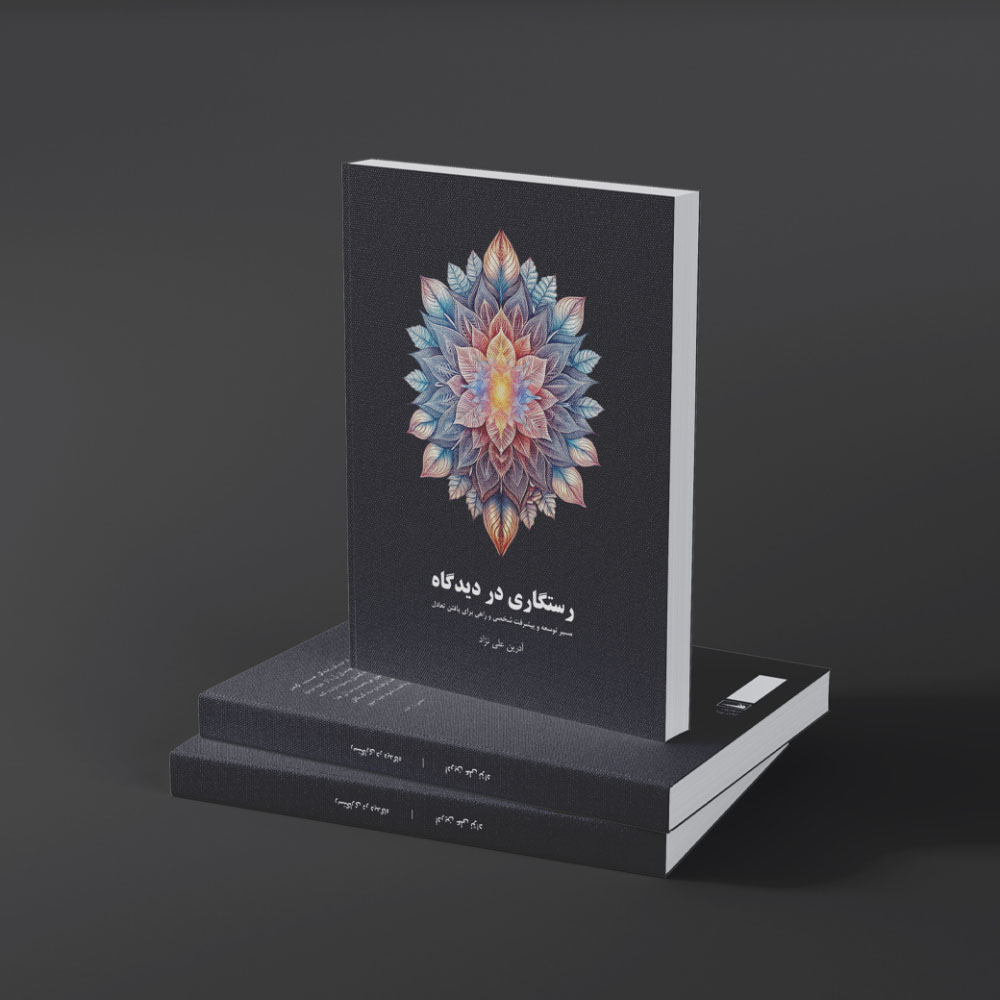
Redemption in perspective, is my first book, which took nearly two years to write. This book explores the concept of redemption from various perspectives. It's a philosophical and psychological work that delves into self-awareness and improving current life situations.
Book's Introduction
Years ago, the sum of what I knew about the world and the people of the Earth extended no further than a few dozen individuals and a handful of familiar sights in our city. It was as if the universe had condensed all its profound richness into those few simple concepts. Days and nights— sunny, cloudy, snowy—and an endless string of tedious, repetitive days. Yet, perhaps each of them, woven together by some powerful, unbroken thread, has guided me to this exact day and hour; a point in time where the world is no longer that small, simple, and tiresome place it once was.
It is a place where colors are no longer ordinary, and oxygen does much more than its usual tasks—it transcends them. It is now a reality bathed in vibrant whites and greens, blues and reds. Plants and fungi can see and hear, and you stand in absolute awe of this creation born out of nothingness. Once again, you gaze up at the sky and unleash the most resonant shout you can muster—releasing it deep within your being, shaking the very foundations of your complex inner landscape.
This is the beginning; here lies a deep breath of relief, and here is a vision into the boundless. Dedicated to the Ultimate Truth. Dedicated to all the past versions of myself who wandered and made mistakes, and to all the versions of myself who chose rightly and now stand at this genesis of infinities. Most importantly, dedicated to all those who guided and accompanied me on this journey, whether in the past or the future, directly or indirectly.
Dedicated to the strangers I would cross paths with on the street, with whom my utmost connection lasted no more than a few fleeting seconds. Yet, in those very seconds, profound lessons were silently imparted, even if merely through the simple act of their walking down the streets and winding alleys.
One of the most magnificent aspects of this world lies in its hidden wonders. When you observe a colony of ants, you might tell yourself what a futile existence they lead, assuming that with the slightest incident—perhaps even being crushed beneath our feet—their lives will simply end. However, after studying and spending time with them, you come to realize their profound wealth of awareness and intuition. You discover the things they know, of which we, even in our exalted state as humans, remain entirely ignorant.
Or consider when a person appears ignorant at first glance. Yet, upon getting to know them, you realize the immense inner wealth a person can possess without displaying it for even a moment—or perhaps they do display it, depending entirely on their personal criteria and desires. Just as balance and observation from a third-person perspective are crucial, I must naturally add that you might encounter a hundred individuals who genuinely know nothing. They are nothing but ignorant, yet they perceive themselves as scholars, living entirely within that illusion. However, such individuals are excusable only as long as they do not know. Once awareness dawns, they know, and from that moment on, they must step forward toward their purpose and their mental and intellectual evolution.
Now, tell me: to understand and to observe, should one sit idly in a corner and wait, or should one be a seeker and actively pursue the truth? Consider the majority of people who complain about not reaching their goals, not being able to observe, and not knowing. They whine, “I went, but there was nothing,” or “The door was closed and locked.” Their situation is like someone lying on a bed, staring at a door in the corner of the room. They say to themselves, “What terrible luck, the door is locked and there is nothing more I can do.” Not for a single moment do they consider that perhaps the door is merely pulled shut, and all they need to do is grasp the doorknob and turn it for the door to open. Or perhaps they do walk over and turn the knob, but when it doesn’t open, they immediately conclude, “It must be locked.” They don’t try again; they don’t consider that maybe the door opens outward, and no matter how hard they pull it toward themselves, nothing will change. One could even look at the problem from another angle: perhaps it is a sliding door, and it simply needs to be pushed to the side. This is the exact moment one must detach the Self from the self, step back, and truly observe.
The present book is intended for all societies, and anyone possesses the capacity to observe and extract knowledge from it. But this does not mean there are no deeper truths concealed within its core. Every chapter of this book converses with you in a way that connects to every other chapter, and all the chapters combined are intricately linked to each individual part. In a state of absolute completeness, the part within the whole, and the whole within the part is woven and deeply embedded throughout the entire book. True to the book’s title, at whatever point in time you choose to read it, it will reveal more to you; and with every rereading, you will confront even deeper, more fundamental details. Throughout the book, I have deliberately provided clear examples to make the subjects easier to grasp. It is up to you to expand these examples to fit any other situation or scenario. It makes no difference; the formula remains the same, you merely need to substitute the variables.
Redemption in Perspective / Shiraz / December 2018